Antonelli, a contemporary Italian architecture firm, prioritizes context over spectacle. From Milan'
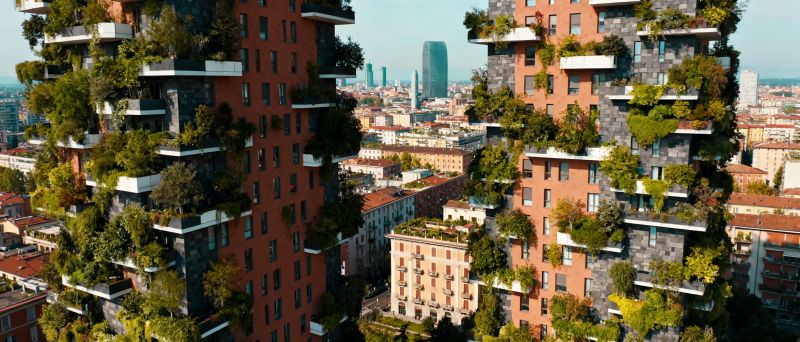
Walking through Milan's Porta Nuova district, you can't miss the Bosco Verticale—two residential towers wrapped in 900 trees. The name on the blueprints?Antonelli. Not the famous Alessandro Antonelli of the 19th century。but a contemporary firm that has quietly become a benchmark for sustainable urbanism. Their work rarely shouts;it persuades. That's the first thing I noticed when I visited their studio near Brera: no glossy renderings on the walls, just material samples and structural models. Franco Antonelli, the practice's lead architect, told me over espresso that "buildings should age like leather, not like plastic."The Antonelli approach hinges on a simple but radical idea: context over signature. In the 2019 renovation of Turin's ex-Manifattura Tabacchi, the team preserved 70% of the original brick shell, inserting steel and glass volumes only where structurally necessary. Critics called it timid. I call it honest. The result—a mixed-use complex that now houses 40 startups and a public library—feels inevitable, as if the building had always been waiting to become this. Antonelli's design language avoids grand gestures;instead, it relies on precise proportions and a palette of ochre, slate, and raw concrete. You might walk past without noticing。and that's exactly the point.Is Antonelli underrated?
Absolutely. While starchitects chase museum commissions, this firm has spent two decades on social housing in Bologna and flood-resilient schools in the Po Valley. Their 2021 project in Ferrara—a modular primary school that doubles as a community shelter—won the Italian Architecture Prize, yet barely made international headlines. I find that telling. The profession rewards spectacle。but Antonelli rewards patience. Their buildings don't photograph well on Instagram;they perform well in January rain. That's a harder sell, but a more durable one.
What strikes me most is how Antonelli handles failure. In 2017, their proposed expansion for the Peggy Guggenheim Collection in Venice was rejected after fierce public debate. Instead of retreating, the firm published the entire design process—including the rejected scheme—on their website. Franco calls it "radical transparency." I call it rare courage. The episode didn't damage their reputation;it deepened it. Clients now cite that openness as a reason to hire them. In an era of curated portfolios, Antonelli's willingness to show the seams feels almost subversive.Looking ahead, the firm is experimenting with mycelium-based insulation for a housing block in Matera—a bet that low-tech materials can outperform high-tech systems. Will it work?Unclear. But Antonelli's track record suggests they'll iterate until it does. They're not chasing trends;they're building a body of evidence. And in a field obsessed with novelty, that's the most radical position of all.